Ocean Vuong’s The Emperor of Gladness
Vuong’s second novel opens on a bridge. A boy about to jump is stopped by an elderly woman with dementia asking him to carry her groceries. What follows is the most tender exploration of American working-class life published in a decade.
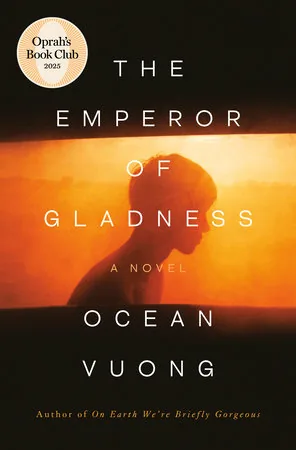
Ocean Vuong’s second novel opens on a bridge in Connecticut. A nineteen-year-old boy named Hai is about to jump. An elderly Lithuanian woman with dementia stops him — not with wisdom or a speech, but by asking him to carry her groceries. What follows is a year of caregiving, fast-food shifts, and quiet reckoning that somehow becomes the most tender exploration of American working-class life published in a decade.
Not the expected book
This is not the book people expected after On Earth We’re Briefly Gorgeous. It is bigger, messier, funnier. Vuong has always been a poet first, and the sentences here still land with that compressed, held-breath precision and mystifying fluidity of his earlier work. But The Emperor of Gladness earns something new: patience. The novel breathes. It lets its characters sit with each other in silence. It finds beauty in a man scrubbing a fryer at midnight, in a woman forgetting her own name but remembering how to laugh.
The relationship at its centre
Hai’s relationship with Grazina — based on a real woman Vuong cared for — is drawn without a single drop of sentimentality. Their bond is built on proximity and repetition. He bathes her. She tells him stories that may not have happened. They eat together. The novel understands that love is often just showing up, day after day, for someone who cannot repay you.
What Vuong set out to write
Vuong has said he wanted to write a book about people for whom the American Dream means keeping the same job for thirty years and driving the same car. He has done that. He has also written a book about grief, about the immigrant body at work, and about the strange holiness of ordinary life. It was named a Best Book of 2025 by nearly every major publication, and it deserves every word of that praise.
Essential. Vuong has expanded what he can do without losing what makes him singular. This is his finest prose work.
If this was useful, buy me a coffee.
Flash fiction and poetry in the tradition of what you just read. Written on the road. Over 1,200 readers. Free.
Read and subscribe →