The Palm House by Gwendoline Riley: A Review
Gwendoline Riley’s seventh novel arrived in April 2026 with the kind of advance attention she’s never quite courted and rarely received. Picador won her in a six-way auction. The press release calls it her finest novel yet. The literary trade has been, by Riley standards, audibly excited. A long look at what The Palm House adds to one of British fiction’s most sustained bodies of work.
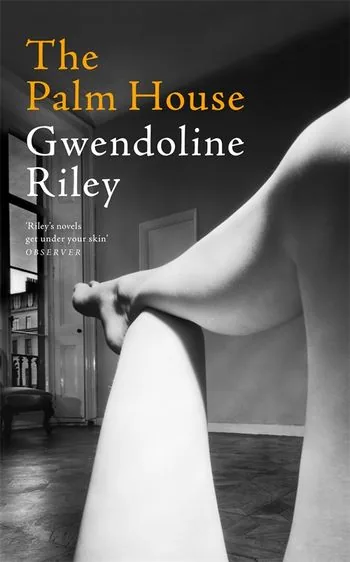
This is unusual because Riley has spent two decades being one of the most quietly admired writers in British fiction without ever quite breaking into the mainstream conversation. My Phantoms in 2021 came closest. It was shortlisted for the Women’s Prize and praised by the kind of reviewers who don’t praise easily. But she’s still the writer most people who love her describe as the writer no one else seems to know about.
The Palm House may change that. Or it may not. Riley’s work has always demanded a particular kind of patience from readers, and the literary marketplace doesn’t always reward patience. What I want to do here is take the novel seriously as the latest instalment in a body of work that’s been doing something specific and sustained for a long time, and ask what The Palm House adds to it.
The set-up
The novel follows Laura and Edward, two London-based writers in their thirties who’ve been friends for years and are negotiating, in different ways, the gap between the literary lives they imagined and the literary lives they’re actually living. There’s a precarity to both of them that Riley has always been good at writing. Rented rooms. Patchy income. The slow erosion of the certainty that the work will eventually amount to something.
The premise sounds slight when you summarise it. That’s part of the point with Riley. She’s never been a writer who builds plots. Her novels are built out of conversation, observation, and the quiet calibration of distance between people. The drama happens at the level of the sentence, not the level of the scene. If you’re reading her for what happens, you’re reading her wrong.
What does happen, as far as I can tell from the novel’s structure and the early coverage, is a death. Someone close to Laura and Edward dies, and the novel becomes about how each of them processes it, separately and together. The death isn’t dramatised. It’s absorbed. Riley has always been more interested in the after than the event itself.
What the writing does
Riley’s prose is the closest thing to a baseline reference point for what minimalist British fiction actually looks like in 2026. Short sentences. Direct verbs. No metaphor that hasn’t earned its place. She writes dialogue better than almost any of her contemporaries, by which I mean she writes dialogue that sounds like the way people actually talk when they’re trying not to say what they really mean.
This is rarer than it ought to be. Most contemporary literary fiction handles dialogue badly because most contemporary literary writers don’t trust dialogue to do the work. They surround it with attribution, qualification, mood-setting interior commentary. Riley trusts the line. She lets two characters speak and lets the reader work out what’s underneath. The trust is what makes the novels feel adult.
Her sentences also resist the rhythm of competence. There’s a default register in MFA-trained literary fiction where every sentence is well made and forgettable. Riley’s sentences aren’t always well made in the conventional sense. They sometimes stop short. They sometimes refuse the satisfying clause. The effect is that they sound like a real voice, not a workshopped voice. This is the iceberg principle applied not to narrative but to syntax: the weight is below the surface of the line.
What I expect The Palm House to do well, based on her track record, is the texture of the friendship between Laura and Edward. Riley has always been brilliant at platonic intimacy. The kind of long friendship where two people know each other so thoroughly that they can be cruel by accident and tender without warning, and where the rules of the relationship have been negotiated over years without ever being made explicit. Almost no one writes this well. Riley does.
Where the novel might struggle
Worth being honest about the challenges Riley’s work poses, because they’re real and The Palm House won’t escape them.
The first is that her novels demand a reader who’s willing to sit with very little forward momentum. If you need plot to keep turning the page, Riley will frustrate you. The compression is the point, but compression in a novel is always a gamble. The writer is asking the reader to slow down at exactly the moment most contemporary fiction asks them to speed up. Some readers won’t make the trade.
The second is that Riley’s emotional register can read as cold to readers who haven’t tuned into her wavelength. The restraint that her admirers find devastating can read to others as withheld. This is a familiar problem with the minimalist tradition — Carver had it, Hempel still has it — and Riley sits squarely inside that lineage. The readers who get it get it deeply. The readers who don’t tend to bounce off the surface and assume there’s nothing underneath.
The third is the question of whether Riley’s specific subject matter — literary precarity, complicated friendships, the long aftermath of difficult parents — is starting to feel like a closed loop. Each of her novels operates inside roughly the same emotional and demographic territory. My Phantoms deepened it. First Love sharpened it. The Palm House will need to do something that extends the territory rather than just revisiting it. Whether it manages that is the central question of the novel’s success, and one I’d want to test against a full reading.
What’s original here
The press coverage suggests The Palm House makes one significant move that distinguishes it from her earlier work: it puts two writers at the centre and lets the novel be partly about the act of writing itself. This is dangerous ground. Novels about writers are notoriously self-indulgent and almost always insufferable.
But Riley has earned the right to attempt it. Her interest in the literary life isn’t about prestige or reputation. It’s about the daily reality of trying to make work in conditions that don’t reward it: small advances, smaller audiences, the constant low-grade anxiety of wondering whether the thing you’re spending your life on is worth spending your life on. That’s a subject very few literary writers handle without preening. Riley has the temperament for it because she’s spent her career inside that exact precarity.
If the novel pulls off the writers-on-writers angle without becoming a closed-room conversation between literary insiders, it’ll be a real achievement. That’s the test the book has to pass.
Where Riley sits in the contemporary field
Most reviews of Riley try to place her inside the autofiction conversation. I think this is a mistake. The autofictional novel as practised by Cusk, Lerner, Knausgaard and their many imitators is built around the I-as-protagonist, the lightly disguised version of the author whose authority is the authority of lived experience. Riley’s novels aren’t doing that. The narrators are clearly fictional. The autobiography is filtered, refracted, compressed. The voice is constructed, not transcribed.
She belongs somewhere closer to the late minimalist tradition. Not to Carver and Hempel directly, but to the British inheritance of that mode through writers like Helen Garner and, to a lesser extent, Penelope Fitzgerald in her short novels. The lineage is restraint, plain prose, and the trust that small things are enough.
Placing her there matters because it changes what you ask of the work. You don’t ask Riley to confess. You ask her to compose. The composition is the reason to read her. If you bring autofictional expectations to The Palm House you’ll miss what it’s doing.
What I can say from her body of work and from what’s been reported about this novel is that Riley remains one of the most quietly serious writers in British fiction, and that The Palm House looks like the novel where she finally has the audience she’s deserved for years. Whether the audience stays with her depends on whether she’s extended her range or refined it. Both are valuable. Refinement is what most writers do. Extension is what makes a career rather than a body of work. Riley at this point in her writing life can probably do either credibly. Which one The Palm House turns out to be is the question worth reading for. If you’ve never read Riley, this isn’t the wrong place to start. My Phantoms is the better introduction if you want her at her most pared-down. First Love is the better introduction if you want her at her most emotionally exposed. The Palm House sits somewhere between them on the available evidence, with the added complication of the writer-protagonists.
The Palm House by Gwendoline Riley is published by Picador, April 2026. Available from Bookshop.org UK, which supports independent bookshops and contributes a small commission to Tumbleweed Words at no extra cost to you.
For more on what contemporary literary fiction is doing right now, my piece on literary fiction in 2026 covers the wider landscape this book sits inside. For more on the minimalist tradition Riley belongs to, the Iceberg Theory craft essay and Minimalist Fiction: The Techniques That Actually Work cover the lineage in detail.
If this was useful, buy me a coffee.
Flash fiction and prose poetry in the tradition of what you just read. Written on the road. Over 1,200 readers. Free.
Read and subscribe →