Camus’ The Outsider
Meursault kills a man on an Algerian beach and feels nothing about it. What follows is one of the strangest and most important novels ever written — the founding text of literary absurdism.
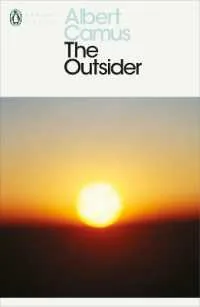
“Mother died today. Or maybe yesterday; I can’t be sure.”
No opening line in twentieth-century fiction does more work. Camus published The Outsider in 1942, the same year as The Myth of Sisyphus, his philosophical essay on the absurd. The novel is the essay made flesh — but it is better than the essay, because Meursault is more interesting than any argument.
Meursault
He is a French Algerian office clerk. His mother dies; he does not cry at her funeral. He goes to the beach, meets a woman, watches a fight, and shoots a man — an Arab, unnamed, reduced to the sun glinting off his knife. He does not know why he shot him. He does not understand why the court is so interested in the question. The second half of the novel is his trial, in which the prosecutor cares far more about Meursault’s failure to mourn than about the murder itself.
The absurd made readable
Camus’ point is that society cannot tolerate a man who refuses to perform the correct emotions. Meursault is condemned not for killing but for failing to be appropriately sorry, appropriately human, appropriately legible. The novel is a critique of social conformity dressed as a murder story. It is 123 pages and it changes how you see every interaction you have for weeks afterwards.
“I looked up at the mass of signs and stars in the night sky and laid myself open for the first time to the gentle indifference of the world.”
Sartre said it was the best French novel of the Occupation years. It is hard to disagree.
One of the great short novels. The opening line alone is worth the price. Everything after it earns the shock of that beginning.
If this was useful, buy me a coffee.
Flash fiction and poetry in the tradition of what you just read. Written on the road. Over 1,200 readers. Free.
Read and subscribe →